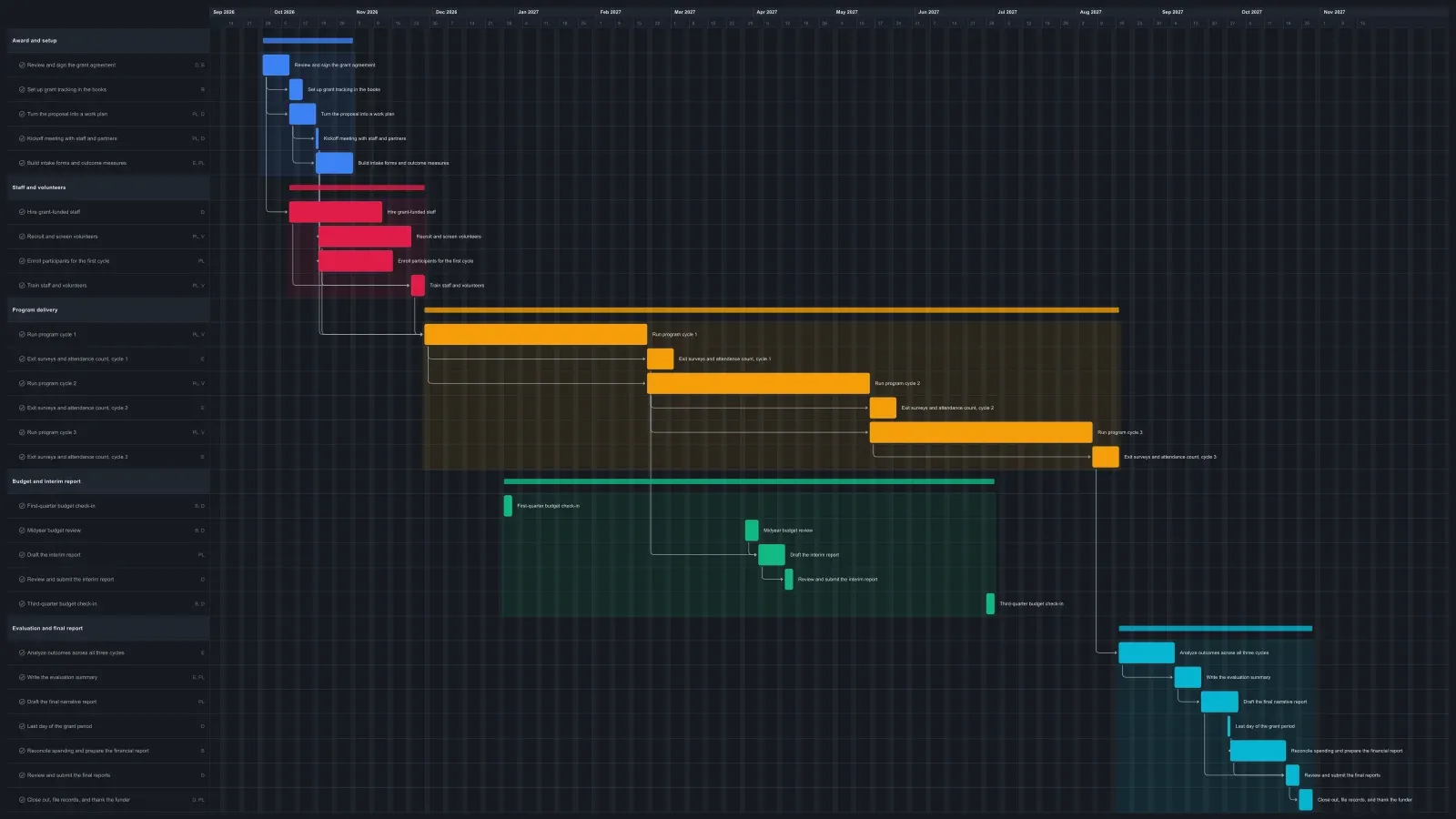
What a grant-funded project timeline looks like
A one-year grant usually splits into about two months of setup, most of a year of delivery, and a month or so of reporting after the grant period ends. This template runs about 13 months from signing the agreement to closeout, for a small community program run by a part-time program lead with volunteers.
Setup covers the agreement, a work plan, tracking in the books, outcome measures, hiring if the grant funds a role, and volunteer recruiting. Delivery runs three 12-week program cycles back to back, with exit surveys after each one. The interim report falls around the midpoint, and the final narrative and financial reports come after the last day of the grant.
The budget check-ins sit on fixed dates, at three, six, and nine months, because they follow the grant's calendar rather than the program's progress. Your funder's dates may differ. Drag the bars to match your agreement.
Why a late start is the risk to watch on a grant timeline
A late start matters most because the grant period doesn't move when you do. The end date is in the agreement, so once the slack is used up, every week lost to hiring or recruiting comes out of the program at the other end.
In this template, the three program cycles are chained to setup. If volunteer recruiting runs three weeks long, training, all three cycles, the surveys, and the evaluation move three weeks. Cycle 3 still ends before the grant period does, and the final reports move only three days, because the books can't close until the grant ends anyway.
A slip of about eight weeks is different. Cycle 3 then runs past the last day of the grant, and the chart shows it the day you move the bar, in month two instead of month eleven. That's early enough to shorten a cycle or ask your funder about a no-cost extension while there's still time to plan around the answer.
How to adapt this nonprofit Gantt chart to your grant
Start with the grant agreement. Set the last day of the grant period, the interim report, and the final reports to the dates it gives you, then drag the budget check-ins to your funder's reporting periods.
If your program runs continuously instead of in cycles, replace the three cycles with one long delivery bar and keep a data task at the midpoint and the end. If the grant doesn't fund a new role, delete the hiring task; training then waits only on volunteer recruiting.
The program lead is capped at 20 hours a week, a common part-time schedule. Hours are set on the lead's main tasks, and each cycle takes about 12 hours a week. In the week the interim report is drafted during cycle 2, the lead goes over the cap, and EverGantt marks it. Stretch the draft over three weeks or give part of it to the director, and the flag clears.
Make it yours
Drag the first task to your real start date and everything linked to it moves along. Rename the roles to your people, then export a PNG, PDF, or SVG when you need to share it. No template fits? Start from a blank plan with the project schedule maker. Saving to the cloud starts at Pro; sharing with teammates is on Team and Business.