What a realistic thesis timeline looks like
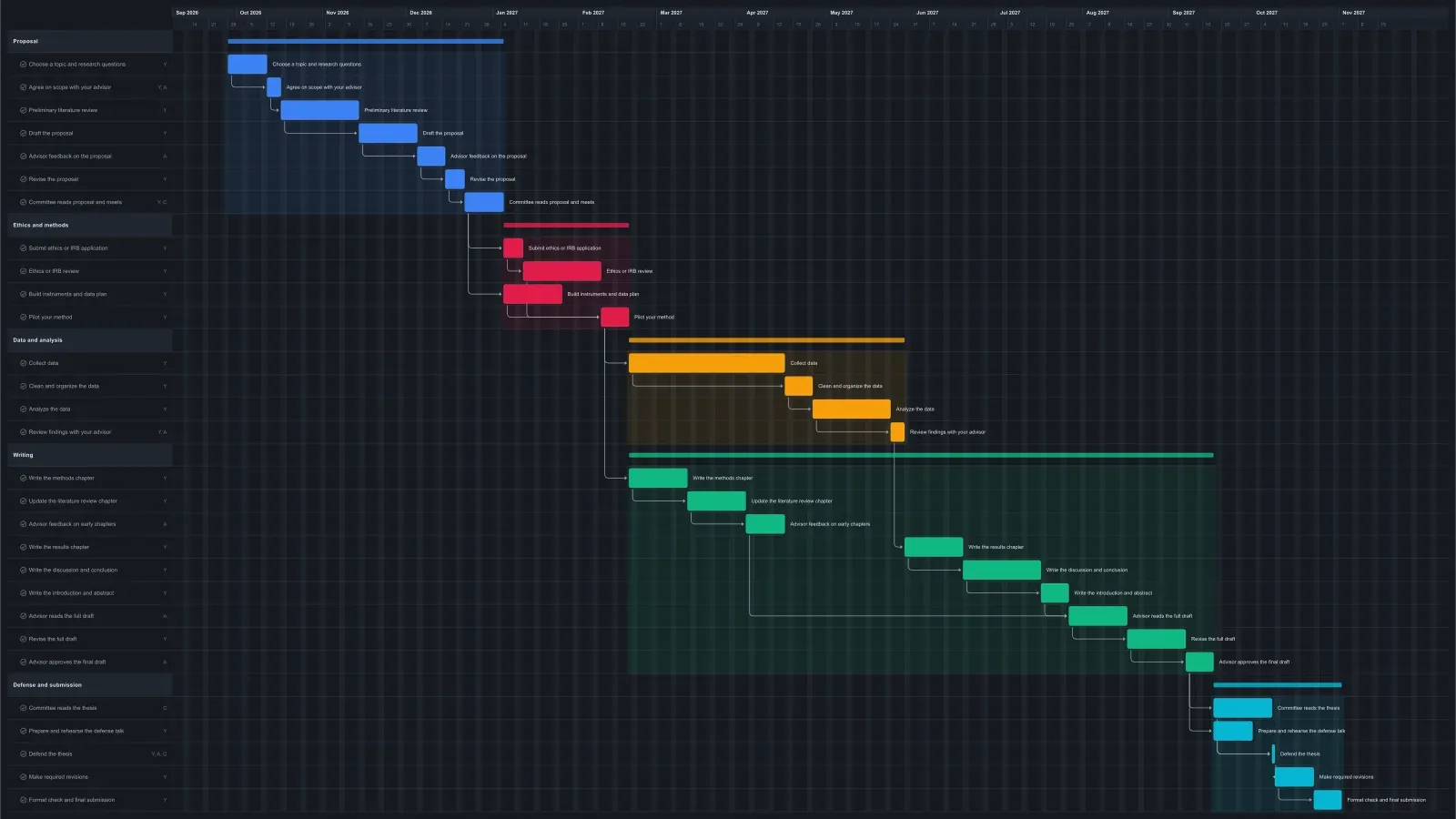
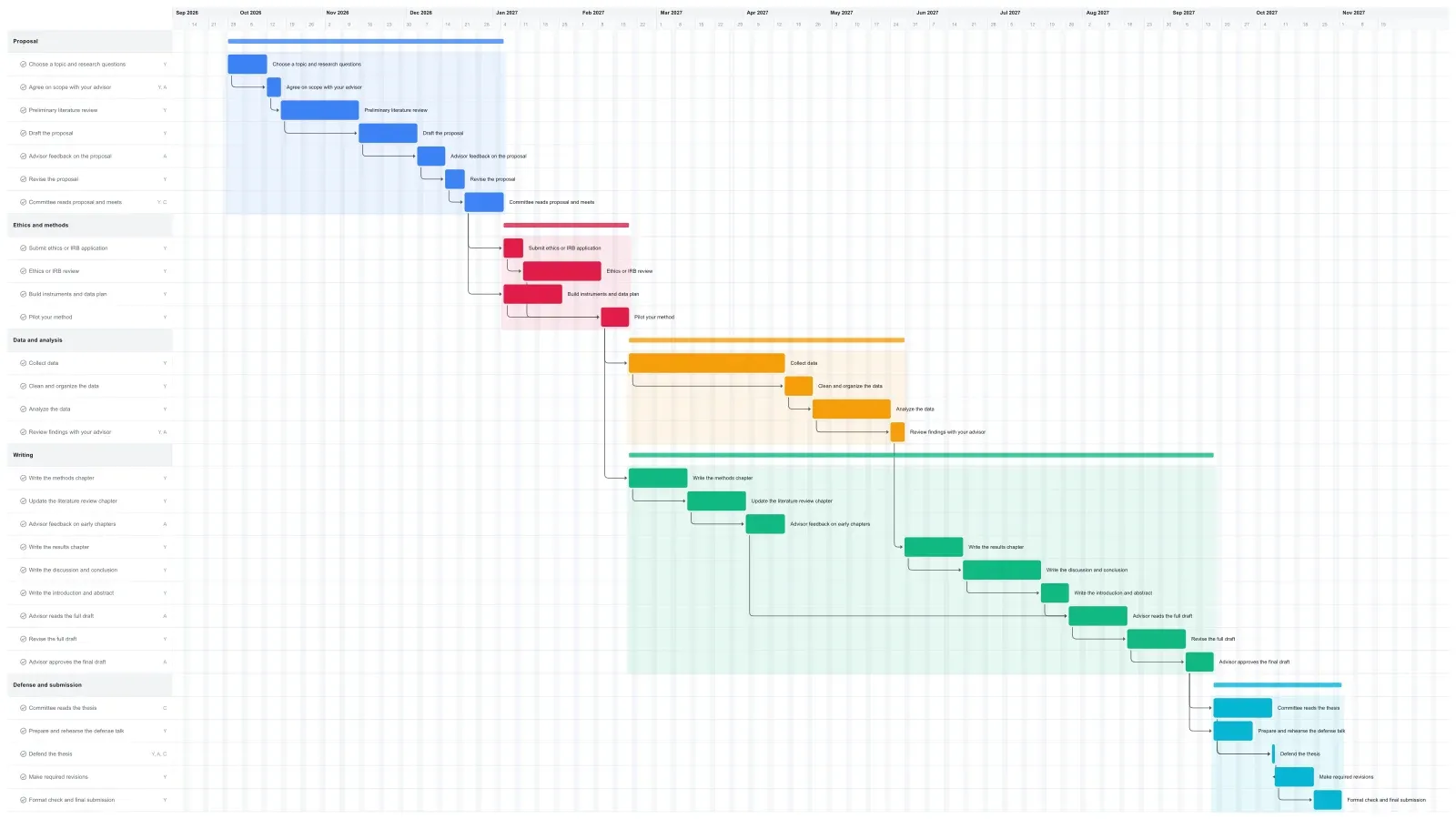
A master's thesis usually takes a year or more from topic to submission, and most of that time goes to research and writing. This template gives the proposal about three months, ethics review and methods about six weeks, data collection and analysis just over three months, and the rest to writing, feedback, and the defense.
The phases overlap on purpose. You write the methods chapter and update the literature review while the data comes in, because those chapters depend on your plan rather than your results. Push them until after analysis and the whole plan gets about six weeks longer.
The review windows follow how graduate programs tend to run. Committees usually want the full draft at least two weeks before a defense, and ethics review can take anywhere from a week to more than a month depending on the type of review. If your program publishes its own deadlines, drag the bars to match them.
Why advisor and committee reviews get their own bars
Reviews get their own bars because waiting is where thesis schedules slip. When a draft sits with your advisor for three weeks, nothing on your side moves, and a plan that hides that wait looks on track until the defense date is suddenly too close.
Your advisor reads the proposal, the early chapters, and two rounds of the full draft. The committee reads the proposal and then the finished thesis. Each read is linked to the task that needs its feedback, so when a read runs long, the chart shows what it pushes.
So ask your advisor how long they usually need to read a chapter, and put their answer in the bar. If they say two weeks and you planned ten days, you learn that now instead of the week before your committee needs the draft. The same logic is why the methods and literature chapters go to your advisor while data collection is still running. Their comments come back weeks before you start the results chapter.
How to adapt this thesis Gantt chart for a dissertation
For a PhD dissertation, stretch the literature review, data, analysis, and chapter-writing bars, and add a task for any qualifying exam your program requires. If your dissertation has several studies, copy the Data and analysis phase once per study and link each one to the chapter it feeds.
For a shorter master's or honors thesis, cut data collection and the writing bars first. Leave the review windows alone if you can, because other people's calendars set those.
If your research has no human participants, delete the two ethics tasks. Then Cmd-click (Ctrl-click on Windows) the pilot and the tasks after it and drag them back to close the gap.
If you work more or fewer hours, change the student role's weekly cap. It's set to 20, which fits research alongside classes or teaching. Hours are set only during data collection: about 10.5 a week collecting plus 7 writing, about 17.5 in total. Add hours to other tasks and EverGantt marks any task in a week that goes over.
Make it yours
Drag the first task to your real start date and everything linked to it moves along. Rename the roles to your people, then export a PNG, PDF, or SVG when you need to share it. No template fits? Start from a blank plan with the project schedule maker. Saving to the cloud starts at Pro; sharing with teammates is on Team and Business.